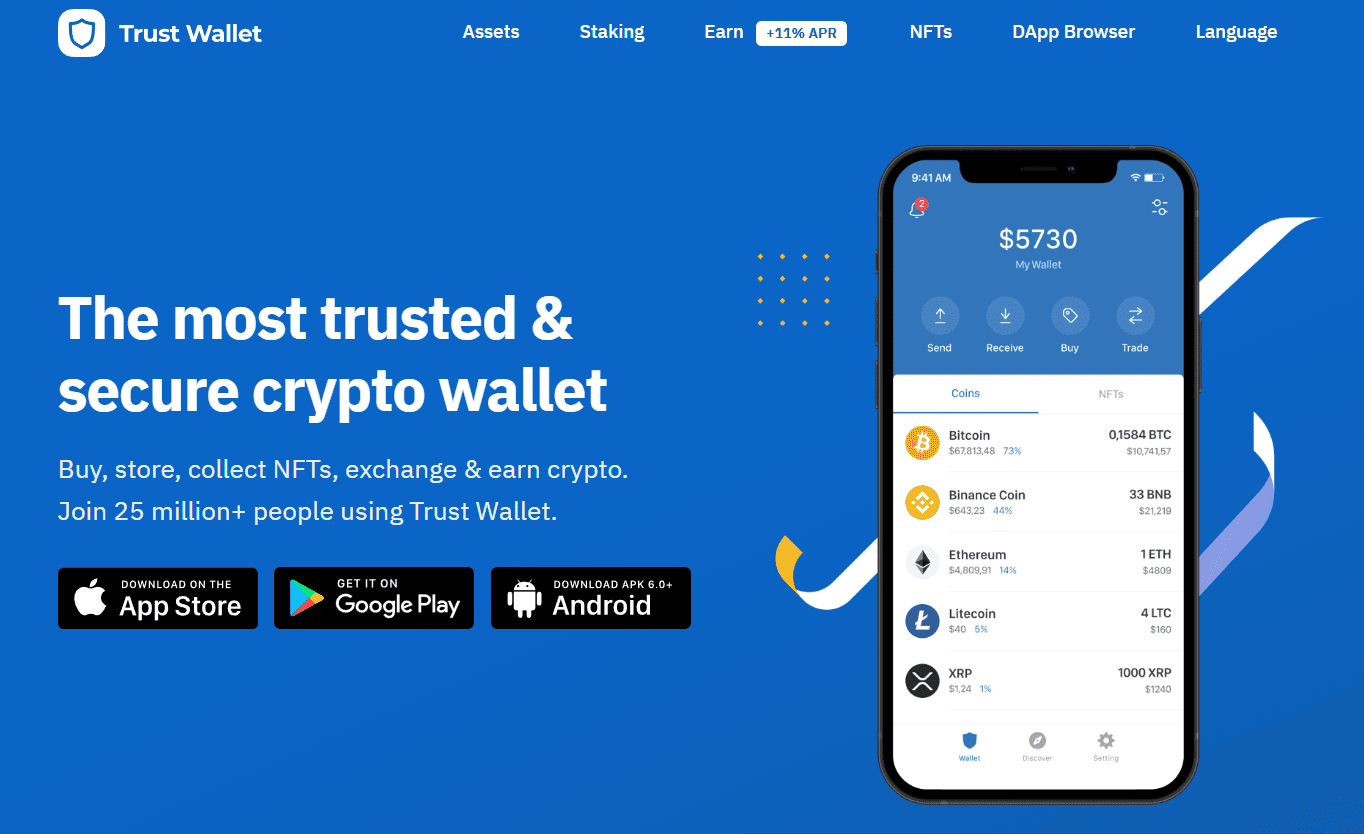
Trust Wallet:
Cryptocurrency is revolutionizing the way we store, send, and invest money. While exchanges allow buying and trading crypto, storing your assets safely is equally important. Trust Wallet is one of the most popular mobile wallets, offering security, multi-asset support, and decentralized management. This comprehensive guide explores everything you need to know about Trust Wallet, from setup to advanced features and security tips.
What is Trust Wallet?
Trust Wallet is a non-custodial mobile cryptocurrency wallet that lets users store, manage, and stake crypto securely. Unlike centralized wallets on exchanges, Trust Wallet allows users to own their private keys, which remain entirely under their control.
Key aspects of Trust Wallet include:
Support for multiple cryptocurrencies and tokens
Staking and DeFi integration
Web3-enabled DApp browser
Secure backup via a recovery phrase
Biometric and PIN-based authentication
Trust Wallet is available for both iOS and Android, making it a widely accessible solution for mobile crypto management.
Why Trust Wallet is Popular
Trust Wallet has grown rapidly due to several features that appeal to both beginners and advanced users:
Full control of funds – Users hold private keys locally, meaning no third party can access funds.
Multi-chain support – Works with Ethereum, Binance Smart Chain, Solana, and other major blockchains.
Ease of use – Simple, intuitive mobile interface.
DApp integration – Access decentralized applications without leaving the app.
Staking rewards – Earn passive income from supported cryptocurrencies.
These features make Trust Wallet a versatile, all-in-one crypto management solution.
Key Features of Trust Wallet
1. Multi-Cryptocurrency Support
Trust Wallet supports thousands of cryptocurrencies, including Bitcoin, Ethereum, Binance Coin (BNB), Solana, and countless tokens. Users can manage multiple assets within a single mobile app.
2. Non-Custodial Ownership
Trust Wallet is non-custodial, meaning you control your private keys. Funds are not stored on servers or exchanges, reducing exposure to hacks.
3. DApp Browser
The built-in Web3 browser allows users to connect directly to decentralized applications. Examples include DeFi lending platforms, NFT marketplaces, and crypto games.
4. Staking
Trust Wallet enables staking for supported cryptocurrencies, letting users earn rewards directly from the app without relying on third-party platforms.
5. Security
Security features include:
12-word recovery phrase
PIN and biometric authentication
Offline private key storage
App updates to prevent vulnerabilities
Setting Up Trust Wallet
Trust Wallet is beginner-friendly and can be set up in just a few minutes.
Step 1: Download the App
Go to Google Play Store (Android) or App Store (iOS).
Search for Trust Wallet and install it.
Step 2: Create a New Wallet
Open the app and select Create a New Wallet.
Accept terms and conditions.
Step 3: Backup Recovery Phrase
Trust Wallet provides a 12-word recovery phrase.
Write it down and store it offline.
Never share it digitally or with anyone.
Step 4: Confirm Recovery Phrase
Verify your 12-word phrase by selecting words in the correct order.
This ensures your backup is valid.
Step 5: Access Your Wallet
After confirmation, you will see your wallet dashboard, ready to manage your crypto.
How to Use Trust Wallet
1. Receiving Cryptocurrency
Tap Receive on the dashboard.
Choose the crypto you want to receive.
Copy the wallet address or scan the QR code.
Share it to receive funds from exchanges or other wallets.
2. Sending Cryptocurrency
Tap Send, enter the recipient’s address, amount, and network.
Confirm the transaction using PIN or biometric authentication.
Network fees apply depending on the cryptocurrency.
3. Buying Cryptocurrency
Trust Wallet integrates with third-party providers for fiat-to-crypto purchases.
Tap Buy, select a coin, and follow the payment instructions.
Trust Wallet Login Process
Unlike traditional accounts, Trust Wallet does not use usernames or passwords. Access is based on device authentication and recovery phrase:
Open the app and unlock using your PIN or biometric authentication.
If reinstalling or switching devices, tap I already have a wallet and enter your 12-word recovery phrase.
Access all funds and accounts securely.
This method ensures that only you have access to your wallet, maintaining decentralization.
Staking with Trust Wallet
Staking allows you to earn rewards by locking supported cryptocurrencies. Here’s how to stake using Trust Wallet:
Open the wallet and tap Staking.
Select a supported cryptocurrency like BNB, TRX, or Tezos.
Enter the amount to stake and confirm.
Monitor your rewards directly in the app.
Staking rewards vary by coin and network but offer a way to earn passive income while holding crypto.
Using the Trust Wallet DApp Browser
The DApp browser allows seamless interaction with decentralized applications:
Access decentralized exchanges (DEXs), NFT marketplaces, and games.
Transactions are signed within Trust Wallet, keeping private keys secure.
Switch between networks (Ethereum, Binance Smart Chain, etc.) with ease.
Some devices may require enabling the DApp browser manually in settings.
Trust Wallet Security
Trust Wallet is designed with security in mind, but users must follow best practices:
Recovery Phrase – Backup your 12-word phrase offline.
PIN & Biometrics – Add an extra layer of protection.
Offline Storage – Private keys never leave your device.
Updates – Keep the app updated to prevent vulnerabilities.
Safe Networks – Avoid public Wi-Fi for transactions.
⚠️ Trust Wallet cannot recover funds if your recovery phrase is lost.
Trust Wallet vs Other Wallets
FeatureTrust WalletMetaMaskLedgerCustodyNon-custodialNon-custodialHardware walletMulti-CurrencyYesYesYesStakingYesLimitedLedger Live supportedDApp BrowserYesYesThird-party apps neededMobile AccessiOS & AndroidiOS & AndroidLimited (Nano X via Bluetooth)
Trust Wallet balances ease of use, security, and mobile convenience, making it suitable for both beginners and advanced users.
Common Trust Wallet Issues
1. Lost Recovery Phrase
Cannot recover the wallet without it.
Always store offline and secure.
2. Missing Funds
Verify the correct blockchain/network.
Check if the funds were sent to the right wallet address.
3. App Not Opening
Ensure device OS compatibility.
Update or reinstall the app.
4. DApp Browser Not Visible
Enable in settings if hidden.
Update the app to the latest version.
Tips for Using Trust Wallet Safely
Backup your recovery phrase offline.
Enable PIN and biometrics.
Verify wallet addresses before sending crypto.
Use secure networks, not public Wi-Fi.
Keep the app updated.